

One front door, three products
Intent-based content prioritization across all shared surfaces
2021
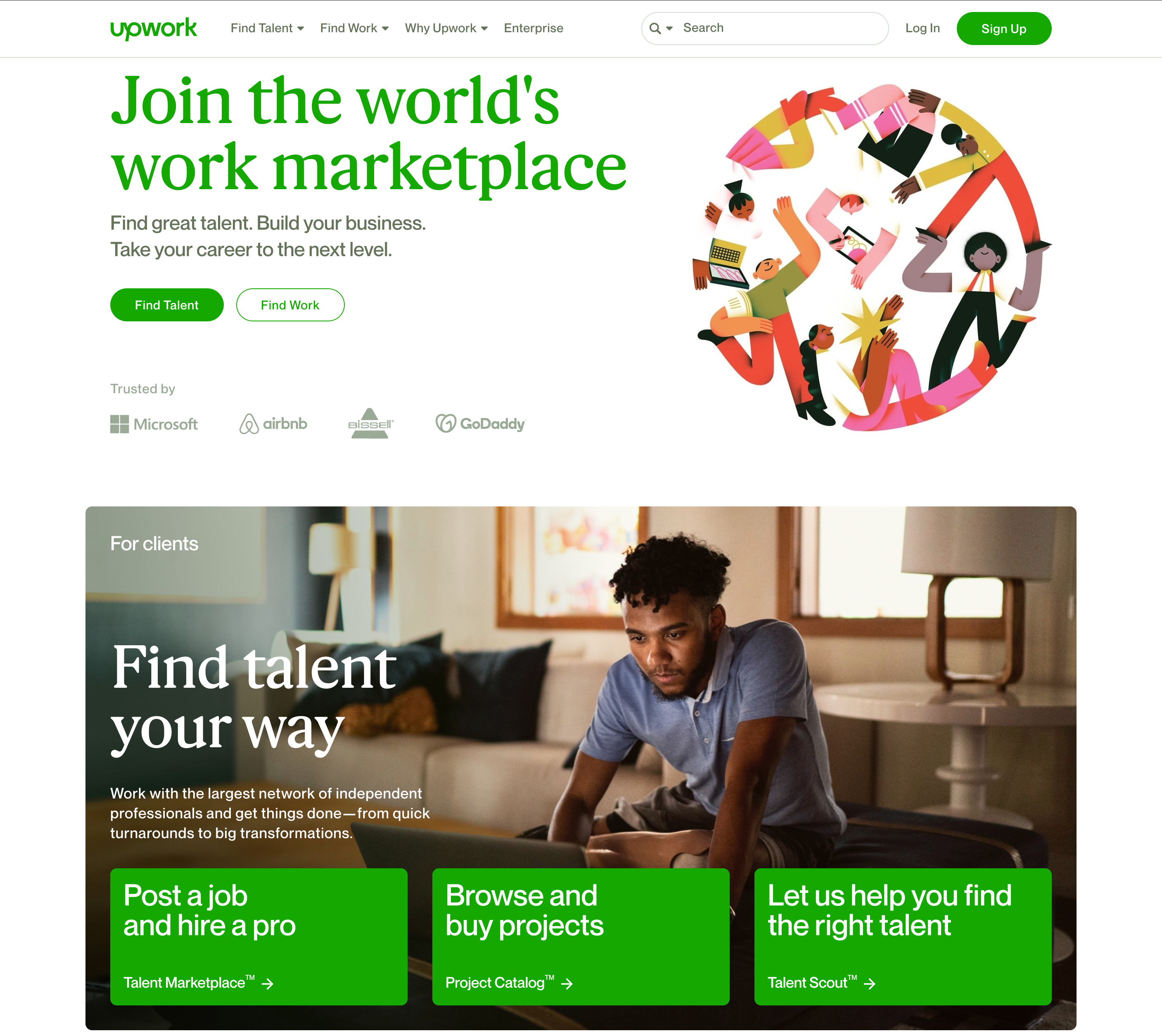
Upwork was a single product company. Clients posted jobs, freelancers bid on them. The whole platform was built around that one motion. Then the company decided to launch two new service models alongside the original, which became Talent Marketplace.
Project Catalog flipped the model. Freelancers posted fixed-price projects and clients browsed and bought like a store. Talent Scout went the other direction entirely. It paired clients with bigger budgets and specific skill needs with someone who would navigate the marketplace on their behalf, vet talent, and match them to the work.
The problem was compounded by the fact that Upwork is a marketplace. Shared surfaces were already balancing two audiences: clients and freelancers. Now each of those audiences had multiple product paths. The homepage, landing pages, organic and paid channels, hub pages. One front door serving multiple customer segments across both sides of the marketplace. The question was how to talk to all of them from the same surfaces without diluting conversion for any one product.
The first step was understanding intent at the surface level. We went deep into traffic data for every shared page to understand where it sat in the broader funnel ecosystem. Who was actually landing here. Were they primarily clients or freelancers. Were they using the page as a launchpad to transact or as a place to learn and evaluate. How far along were they in their decision. What did they do next. Each surface had a distinct behavioral signature that told us who it was really serving and what they needed from it.
That analysis became the foundation for the redesign. We rebuilt every shared surface with a prioritization framework based on our read of visitor intent and expertise. Homepage, landing pages, hub pages, organic and paid entry points. Each page led with the content and product path most relevant to the audience that was actually there, while still giving the other segments a clear way forward.
The result was a system that expanded the total addressable audience across all three service models. Instead of one product trying to serve everyone the same way, each customer got routed to the solution that actually fit their needs.